
Concrete Repair & Floor Prep in CT
Grinding, crack and spall repair, salt-damage fixes and moisture testing — the work under the coating that decides how long your floor lasts.
Get a Free Quote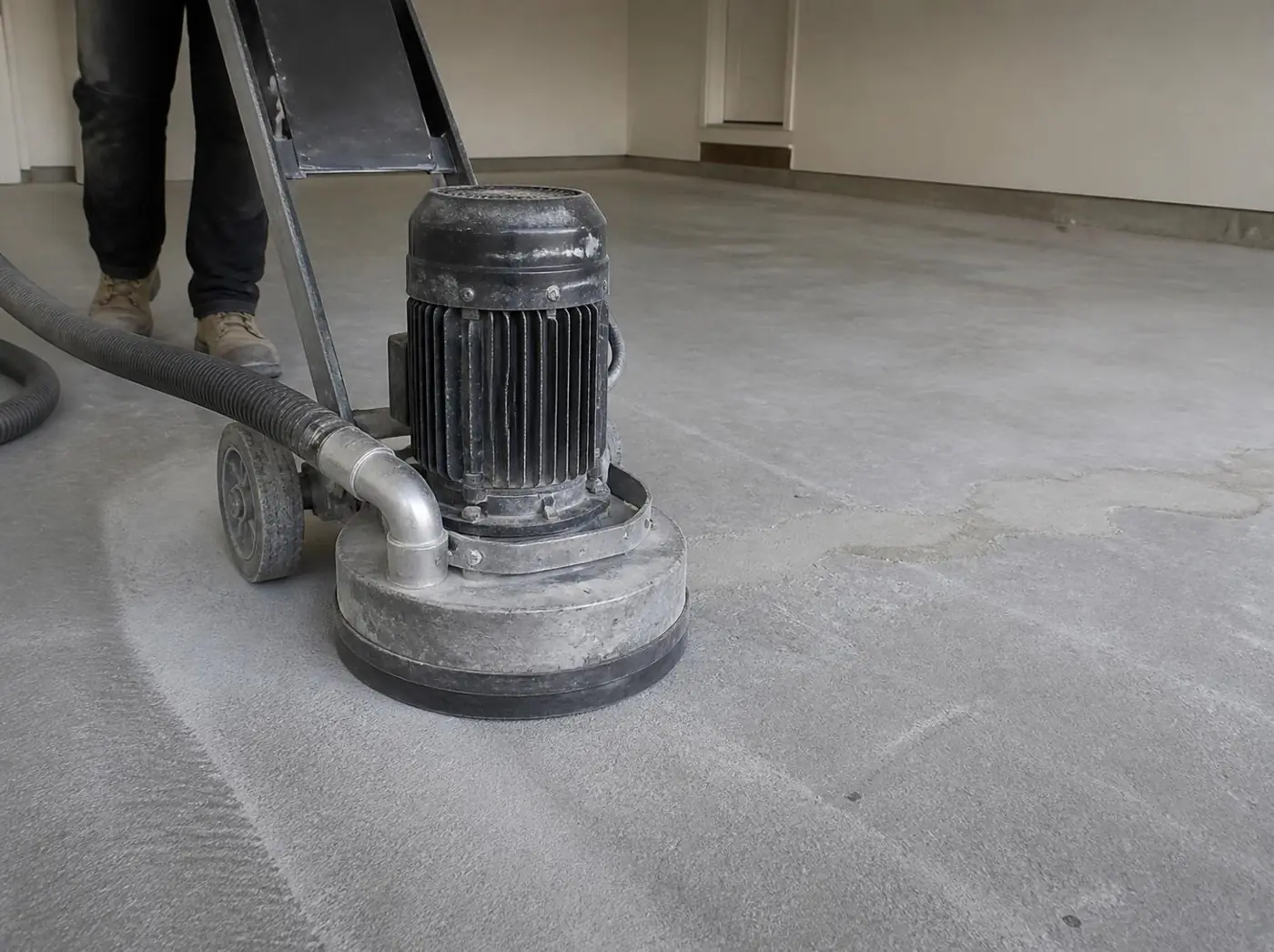
Why most coatings fail
When a garage floor coating peels, bubbles or lifts under hot tires, the coating usually is not the problem. The prep is. Concrete that was not properly opened up, oil and old sealers left on the surface, cracks and pits ignored, or moisture pushing up from below — any of these will undermine even the best product. Connecticut slabs add their own challenges: years of road salt and calcium chloride, freeze-thaw cycles and many older floors with decades of wear.
That is why concrete repair and floor prep is not an add-on for us. It is the first part of every flake epoxy, polyaspartic, metallic and basement floor we install.
Diamond grinding vs acid etching
Acid etching is what most DIY kits use: you scrub a diluted acid into the slab, rinse and let it dry. It is cheap, but it only reacts with clean, bare concrete. It does little to remove sealers, paint or oil, can leave residue behind, and adds a lot of water to the slab right before coating.
Diamond grinding uses a heavy floor grinder with diamond tooling to mechanically remove the top layer of concrete, along with sealers, light coatings and surface contamination. It leaves a consistent, open profile that coatings can bite into. We grind with dust collection and vacuum the slab thoroughly afterward. Most coating manufacturers call for mechanical prep, and it is one of the biggest differences between a professional floor and a DIY kit.
What we repair
- Cracks. Hairline and wider cracks are cleaned out and filled with a repair material, then ground flush. Actively moving cracks are flagged so you know what to expect.
- Spalls. Chipped or broken areas — often near the garage door, drains or where a slab was hit — are rebuilt and leveled.
- Pitted salt damage. Road salt and brine cause scaling and pitting on the surface of many CT garage floors. We grind off loose concrete, fill the pits and smooth the surface before coating. Our guide to road salt and garage floors explains how that damage happens.
- Control joints. Joints can be filled flush for a seamless look or coated into, depending on your preference and the slab.
- Old coatings. Peeling paint, failing DIY epoxy and sealers are ground off so the new system bonds to sound concrete.
- Oil and contamination. Stains are ground and cleaned; heavily oil-soaked areas may need extra treatment.
Moisture testing
Moisture moving up through a slab is one of the most common reasons coatings fail, especially on older and below-grade floors. Before coating, we check for moisture using methods such as a plastic sheet test, a calcium chloride test or a meter reading, depending on the floor. If the slab shows elevated moisture, we may recommend a moisture-tolerant primer. If there is active water, that needs to be solved first. Read more in our guide to concrete moisture testing before epoxy.
What repair typically adds to the cost
Standard grinding and minor crack filling are included in our coating prices. Heavier work — widespread salt pitting, large spalls, extensive crack repair or removing an old coating — typically adds about $1–$3 per square foot. These are estimates; we look at the slab in person and tell you exactly what it needs before you commit. Our garage floor epoxy cost guide shows how repair fits into overall pricing.
Where we do repair and prep work
We prep and repair slabs across Greater Hartford and New Haven, from older detached garages in Hartford and West Hartford to salt-air shoreline homes in Branford. See every town on our service areas page, or walk through our full process. When you are ready, request a free quote.
Frequently asked questions
Why do you grind instead of acid etching?
Diamond grinding mechanically removes the weak top layer of concrete, old sealers and contaminants, and leaves a consistent profile the coating can grip. Acid etching only reacts with clean, bare concrete, can leave residue, and does little to remove sealers or oil. Most coating manufacturers specify mechanical prep, and it is a big reason professional floors outlast DIY kits.
Can you fix a garage floor that is pitted from road salt?
In most cases, yes. We grind away loose, scaled concrete, then fill the pits and spalled areas with a repair material and grind them flush before coating. Deep or widespread damage takes more time and material, which is why heavy repair typically adds about $1–$3 per square foot. Once coated, the slab is sealed against further salt damage.
Will repaired cracks show through the new floor?
On a full-broadcast flake floor, repaired cracks are usually hidden by the flake. On solid-color or metallic floors, they can sometimes remain faintly visible. Also, if a crack is still moving because the slab is settling, it can reappear over time no matter how it is filled. We point out active cracks during the estimate so there are no surprises.
What is joint filling, and do I need it?
Control joints are the straight cuts in a slab that help it crack in planned places. We can fill them flush for a smooth, seamless look and to keep dirt and salt out, or leave them open and coat into them. Filled joints can sometimes show a hairline line later as the slab moves with the seasons. We explain the trade-off and let you choose.
Ready for a garage floor that cleans up in minutes?
Free on-site estimates across Greater Hartford and New Haven County.