
Epoxy Injection Crack Repair for Manchester, CT Garage Floors
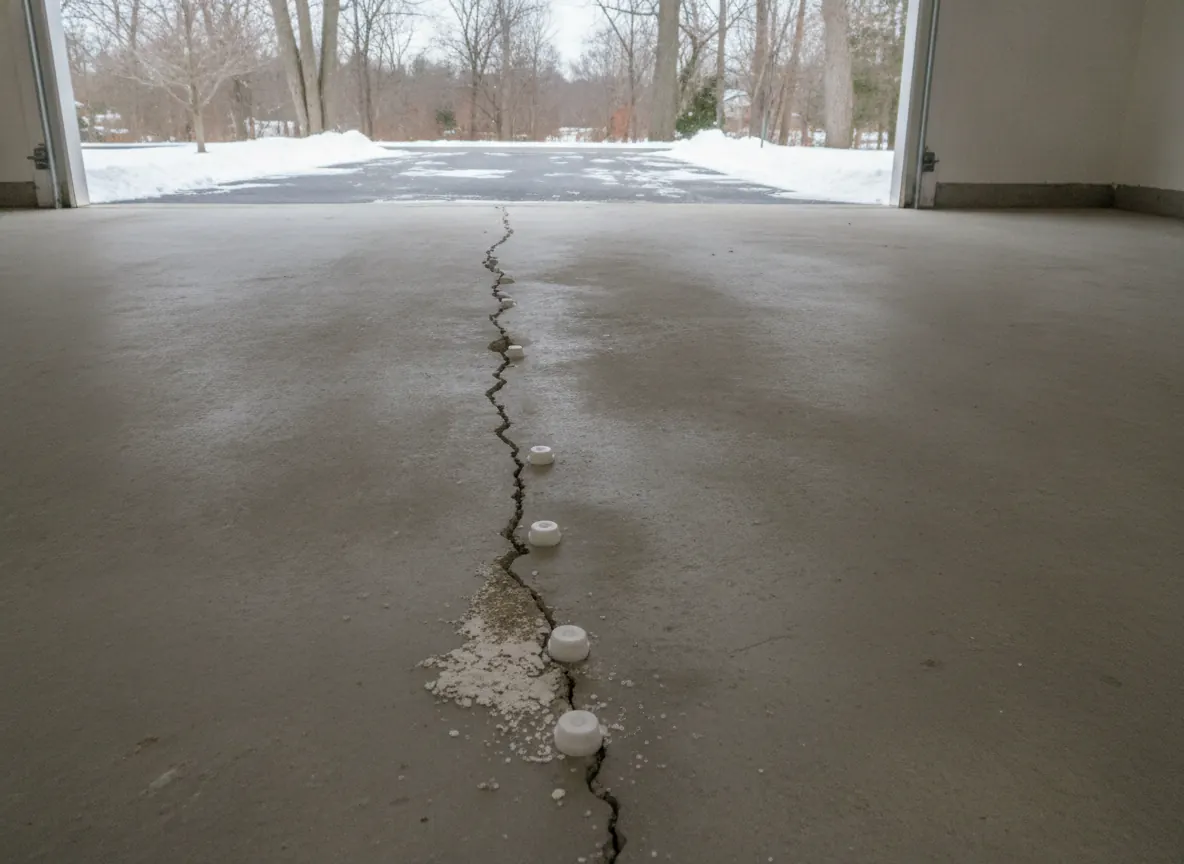
Epoxy injection crack repair means pumping epoxy into a crack under pressure, either to restore the strength of damaged concrete or to keep water and chlorides out of it. It’s a structural repair, and it isn’t the same as the crack filling done before a garage floor coating. On most garage slabs we see in Manchester and around Hartford County, cracks are cleaned out, filled with a repair material and ground flush, so the coating goes down on a sound, level surface. If you’re worried a crack means the slab itself is failing, ask a concrete specialist about that before any coating goes on.
What epoxy crack injection actually involves
Most published technical guidance on pressure-injected epoxy comes from road and bridge work, not from homes. One of the clearer public write-ups is the Texas Department of Transportation’s Concrete Repair Manual. It was written for highway structures, not garages, but a few of its points help any homeowner:
- Purpose. Injection is used to “restore structural integrity of damaged members or to prevent water and chloride infiltration.”
- Very fine cracks can take it. The manual says cracks as narrow as 0.002 inches can be injected, though cracks under about 0.005 inches are often hard to fill.
- Ports and spacing. The crack is sealed at the surface and fitted with injection ports, spaced no farther apart than the crack is deep.
- Dry concrete first. The crack and the surface around it must be dry before the sealer or the injection work starts.
- Skill. The manual says the work takes considerable skill and recommends manufacturer training or a specialty firm.
In short, injection is a targeted repair for a specific crack. It doesn’t prepare or finish the whole floor.
Why chlorides matter for cracks in a Connecticut garage slab
Connecticut DEEP says rock salt (sodium chloride) is the de-icer used most in the state. Magnesium chloride or calcium chloride is sometimes used instead, or mixed in, when it’s colder. Whatever the town trucks spread on Manchester roads rides home on your tires and wheel wells and drips onto the garage floor all winter.
DEEP explains that salt can pull calcium and magnesium out of concrete, leaving it brittle and prone to cracking. Water then seeps into those cracks and freezes, and each freeze-thaw cycle widens what the salt started. That’s why keeping chlorides out is one of the stated reasons for injection. It’s also why a coated floor helps: a sealed, fully cured coating keeps salty slush on the surface instead of letting it soak into the slab. Our road salt and garage floor guide covers that side in more depth.
How garage floor cracks are repaired before a coating
On a coating job, crack work is part of prep, not a separate structural repair. Once the slab has been diamond-ground with dust collection, every crack, pit and spall is easy to see. Hairline and wider cracks are cleaned out, filled with a repair material and ground flush so they don’t show through the finish. Salt-pitted areas near the door and under where the car sits usually take the most work. Our concrete repair and floor prep page walks through each type of repair.
A few honest limits:
- On a full-broadcast flake epoxy floor, repaired cracks are usually hidden by the flake. On solid-color or metallic floors they can sometimes stay faintly visible.
- If a crack is still moving because the slab is settling, it can come back over time no matter how it’s filled. That’s why we point out active cracks at the estimate.
- Control joints, the straight saw cuts in the slab, can be filled flush or coated into. A filled joint can show a hairline later as the slab moves with the seasons.
Crack injection or crack filling: questions to ask in Manchester
A contractor might propose crack filling as part of a coating or a separate injection repair. Either way, these questions sort out the scope quickly. They apply in Manchester and anywhere else in our service area.
- How will each crack be handled? Filled and ground flush, injected, or treated as a joint? Get it per crack, not as one line on the quote.
- Is the slab dry enough? Injection and coatings both need dry concrete. Ask how moisture is checked. Our moisture testing guide explains the common methods.
- Who does the injection work? Because it takes real skill, ask whether the company does it routinely or brings in a specialty firm.
- Is the repair priced in writing? Standard grinding and minor crack filling are normally part of a coating price. Heavier repair, such as widespread salt pitting, large spalls or extensive crack work, typically adds about $1–$3 per square foot (an estimate, not an offer). The garage floor epoxy cost guide shows how repair fits into the total.
- Is the contractor registered? Connecticut’s Department of Consumer Protection says home improvement contractors must be registered, and you can check on the state eLicense site before you hire. A Connecticut home improvement contract must show the registration number and four dates, including the date by which you can cancel. You have until midnight of the third business day to cancel.
Getting a crack plan you can trust
For most garages, the right answer is careful prep: grind, fill, grind flush and coat, with any moving cracks pointed out up front. Injection has its place where the concrete itself needs restoring or sealing, and it’s work for someone who does it often. If you’re in Manchester or nearby, see our Manchester garage floor page. When you’re ready, request a free quote. We’ll look at the cracks in person and spell out the repair scope in writing.
Frequently asked questions
Is epoxy injection the same as filling cracks before an epoxy floor?
No. Injection pumps epoxy into a crack under pressure to restore the strength of damaged concrete or keep water and chlorides out. Crack filling before a coating cleans the crack, fills it with a repair material and grinds it flush so the coating has a sound, level surface.
Do hairline cracks in a garage floor need epoxy injection?
Not usually for a coating job. Hairline cracks are normally cleaned out, filled and ground flush during prep. Injection can reach very fine cracks, but it’s a skilled structural repair. If you’re worried about the slab’s strength, have a concrete specialist look first.
Will a repaired crack come back through my new coating?
On a full-broadcast flake floor, repaired cracks are usually hidden. On solid-color or metallic floors they can stay faintly visible. If a crack is still moving because the slab is settling, it can reappear over time however it’s filled, so active cracks should be pointed out at the estimate.