
Comparing Garage Floor Epoxy Quotes in Hartford & New Haven
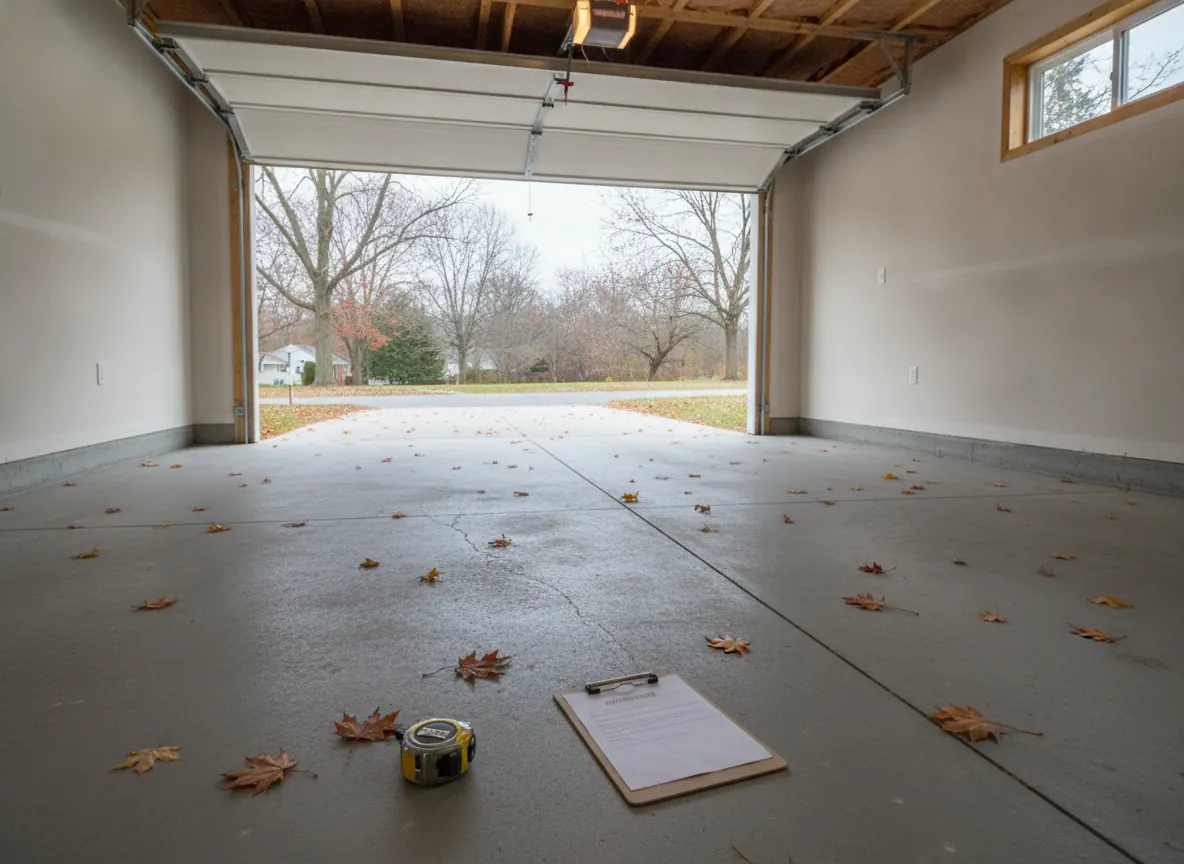
When you’re comparing garage floor epoxy quotes in Hartford and New Haven, it comes down to one question: what is each installer actually going to do to your concrete before the coating goes down? Two quotes for the same two-car garage can be far apart on price, but the gap is usually in prep, repair and the coating system, not the color chips. A useful quote spells out the measured square footage, the system, how the slab will be ground, which cracks and salt pits get repaired, how moisture was checked, and when you can walk and park. If any of that is missing, ask before you sign.
What a written garage floor coating quote should spell out
Start with the basics on paper. A clear written quote lists the measured square footage, the system by name (solid-color epoxy, full-broadcast flake epoxy, polyaspartic flake or metallic), the prep method and the repair scope. Vague “starting at” pricing leaves room for surprises once the grinder is running.
Check the number against the typical installed ranges in our garage floor epoxy cost guide, which are estimates based on published Connecticut pricing, not offers: about $3–$6 per square foot for solid-color epoxy, $5–$9 for flake epoxy, $6–$10 for polyaspartic flake and $7–$12 for metallic, with heavy repair or old-coating removal adding roughly $1–$3 per square foot. A typical two-car garage of 400–480 square feet often lands around $2,000–$4,300. If one quote sits well below the rest, look at what it leaves out. Also keep in mind that one-car garages often cost more per square foot, because setup and grinding time don’t shrink much with the floor.
Ask how the slab will be prepared
Prep is where Connecticut garage floors are won or lost. Ask every installer one direct question: will you diamond-grind the slab, or acid-etch it?
Diamond grinding with dust extraction removes the weak top layer of concrete along with old sealers and oil, and leaves an open profile the coating can grip. Acid etching, the method most big-box kits use, only reacts with clean, bare concrete, does little to remove sealers or oil, and puts a lot of water into the slab right before coating. Most coating manufacturers call for mechanical prep. A low price that skips grinding is not a bargain. Our concrete repair and floor prep page explains the difference, and the DIY kit vs professional guide covers why it matters.
If your garage has old paint or a peeling DIY coating, the quote should say it will be ground off. Coatings don’t bond well to failing paint, and removal is one of the items that legitimately moves the price.
Salt pitting, cracks and control joints in Connecticut garages
Years of road salt, calcium chloride and freeze-thaw cycles leave many garage floors in Greater Hartford and New Haven County pitted and scaled, especially near the door where slush melts off the car and under where the car sits. Older detached garages in Hartford and West Hartford often show the most wear.
A good quote says how pits and spalls will be filled and ground flush, whether control joints will be filled or coated into, and which cracks look active. A crack that is still moving can come back no matter how it’s filled, and you want to hear that at the estimate, not after. On a full-broadcast flake floor, repaired cracks usually disappear under the chips; on solid-color or metallic floors they can stay faintly visible.
Moisture, temperature and timing: questions for every installer
Ask how the slab was checked for moisture: a plastic sheet test, a calcium chloride test or a meter reading. Moisture coming up through the concrete is one of the most common reasons coatings blister and peel, and it matters most on older slabs and on basements in the region’s prewar and postwar homes, many poured without a modern vapor barrier. If readings are elevated, the quote may include a moisture-tolerant primer. Our guide to concrete moisture testing explains what the results mean.
Ask about slab temperature too. Standard epoxy generally wants the slab around 50°F or warmer, which is hard to hit in an unheated Connecticut garage in late fall and winter. Polyaspartic generally tolerates cooler slabs, which is why it’s a common choice for late-fall and early-spring installs. See garage floor coating in cold weather for the details.
Then ask when you can walk on the floor and when you can park. As general guidance, foot traffic is often fine about a day after the topcoat. Parking typically waits several days with epoxy systems and is usually faster with polyaspartic, often within a day or two. A clear quote, or the conversation around it, should give you timing for your floor and your season.
Matching the coating system to how you use the garage
The lowest number isn’t always the right system. A daily-driver garage in Manchester that takes winter slush suits a full-broadcast flake floor, which hides salt film and adds grip. A south-facing garage whose door stays open benefits from a UV-stable polyaspartic topcoat that resists yellowing. A glossy metallic finish is usually better saved for a show garage or a basement, because it shows salt film, water spots and scratches more than flake. If two installers recommend different systems for the same garage, ask each one why. Their answers will tell you a lot.
Frequently asked questions
Should I get more than one garage floor coating quote?
Comparing quotes is reasonable, as long as you compare the same things. Ask each installer how they will prepare the slab, which repairs are included, how they checked for moisture and which system they recommend, so you aren’t comparing a ground, repaired flake floor to a thin coat over etched concrete.
Is the cheapest garage floor quote a bad sign?
Not on its own. Check whether it includes diamond grinding, crack and pit repair, and a full system with a clear topcoat. A low price that skips grinding is not a bargain, and small one-car garages often cost more per square foot because setup and grinding time stay about the same.
What happens at a free garage floor estimate?
The installer measures the floor, looks at cracks, salt pitting, oil stains and any old paint or coating, checks the slab for moisture and asks how you use the space. You should come away with a recommended system and a written price that spells out the prep and repair scope.
Get a quote you can compare
The easiest way to compare quotes fairly is to start with one that spells everything out. Request a free quote for your garage and you’ll get a written price with the system, prep and repair scope listed, plus straight answers on when you can walk and park. Prefer to talk it through? Call (877) 265-2390.